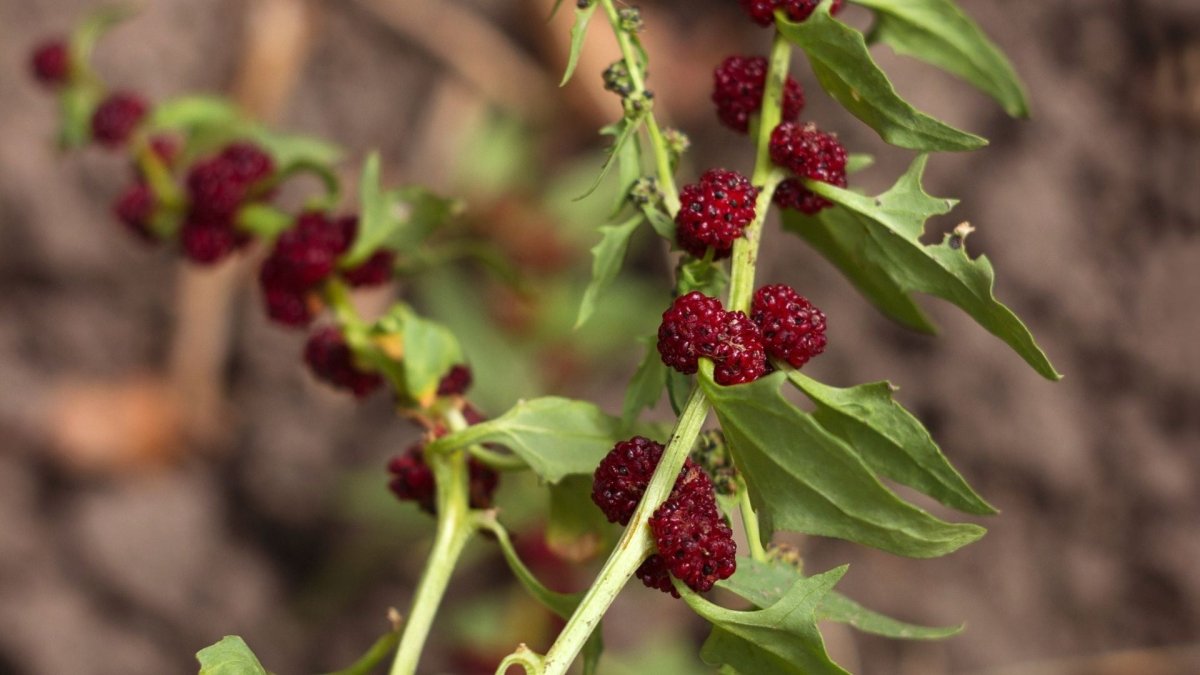


Strawberry spinach (Blitum capitatum) - seeds
Strawberry spinach (Blitum capitatum) - seeds
Strawberry spinach (Blitum capitatum, long known as Chenopodium capitatum): seeds of a North American annual that produces both spinach-like foliage and curious bright red balls lined up along the stems, which are taken for fruits.
Couldn't load pickup availability
Expédié depuis le Jura - Paiement sécurisé - Retrait possible à Francheville
What you receive
What you receive
A packet of 500 seeds, about 0.5 gram.
This red fruit is not a fruit
This red fruit is not a fruit
This is the detail that makes the plant interesting. The red balls are not berries: it is the perianth of the flower that becomes fleshy and fills with juice as it ripens, surrounding the seed. In almost all plants, this role is played by the ovary. Here, the floral parts themselves do the work, which produces a false fruit that looks like a scarlet mulberry.
We may as well be frank about the taste: it is bland. Slightly sweet, very watery, with no acidity. This plant is grown for its looks, not its flavour, and any description that promises a strawberry taste will disappoint you.
Sowing
Sowing
Sow from April to June, in situ or in a seed tray, 5 mm deep. Germination in one to two weeks at 15 to 20 °C. It is one of the easiest sowings in the catalogue: no stratification, no soaking, no light requirement.
Thin out to 25 or 30 cm. Ordinary soil, preferably rich and moist, in sun or partial shade.
The mature plant
The mature plant
A clump, spreading then upright, 30 to 60 cm tall, with toothed, triangular, light green leaves. The false fruits appear in summer and last a long time, clustered in the leaf axils, turning from green to scarlet.
It is an annual and self-seeds very freely: once established, it comes back on its own every year, and needs containing more than looking after.
In the kitchen
In the kitchen
The young leaves are used like spinach, raw in salads when tender or pan-fried. It is a leaf vegetable of old gardens, grown in Europe since the 16th century. The false fruits are edible, and are mostly used to decorate a dessert or a plate, where their colour does all the work.
Frequently asked questions
Frequently asked questions
Does it really taste of strawberry?
No, and the name is misleading. It comes from the appearance of the false fruits, not their flavour, which is mild and neutral.
Is it easy to grow successfully?
Yes, it is one of the simplest we offer. If a sowing fails, it is usually because it lacked water at the start.
Can it be grown in a pot?
Very well, in a pot of at least 5 litres with a substrate that does not dry out.
Will it take over the vegetable garden?
It self-seeds a lot. Pull out the surplus plants in spring, they are easy to recognise, or cut the stems before the seeds ripen.
Also worth exploring: our other seeds from around the world and our edible plants.